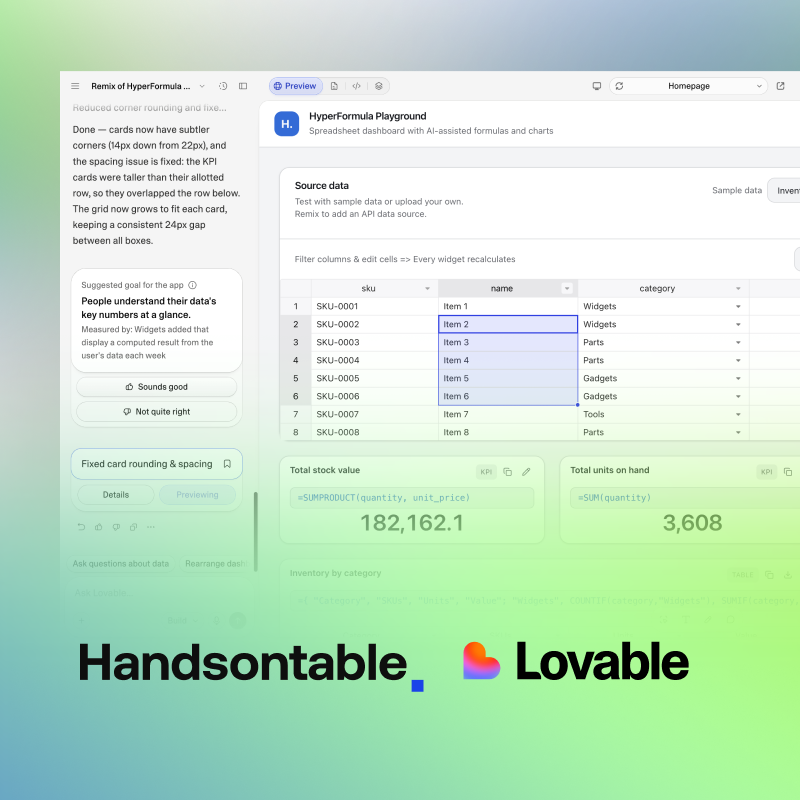
How to test (and improve) Lovable's ability to use your library
I built the same app in Lovable six times to learn how an AI app builder uses our JavaScript library, where it fails, and how to improve it.

I built the same app in Lovable six times to learn how an AI app builder uses our JavaScript library, where it fails, and how to improve it.
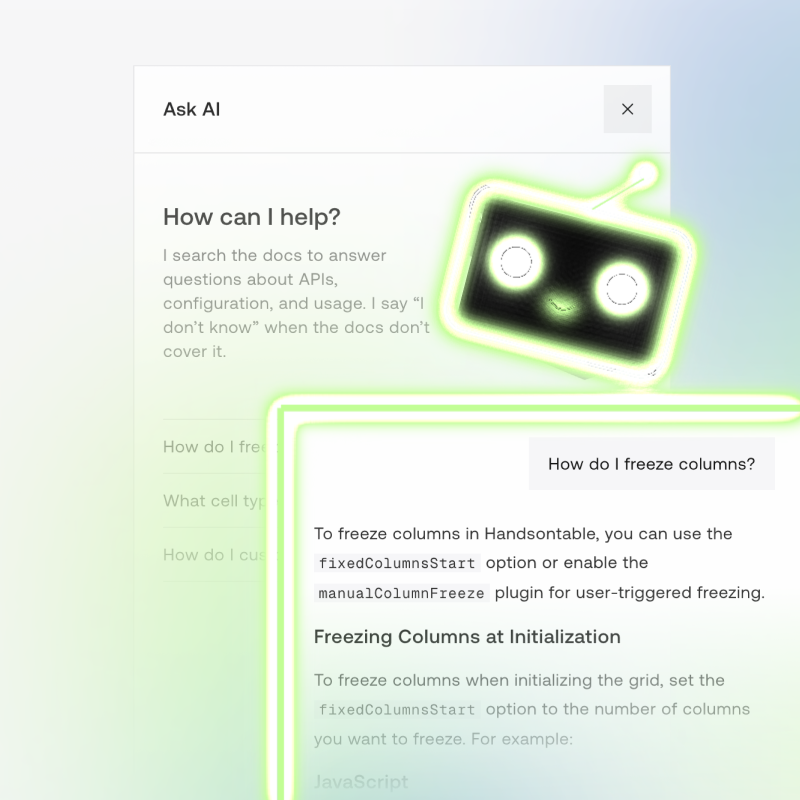
We shipped an AI docs assistant on Pinecone in three days, then rebuilt it on Cloudflare Vectorize and Workers AI so it maintains itself.
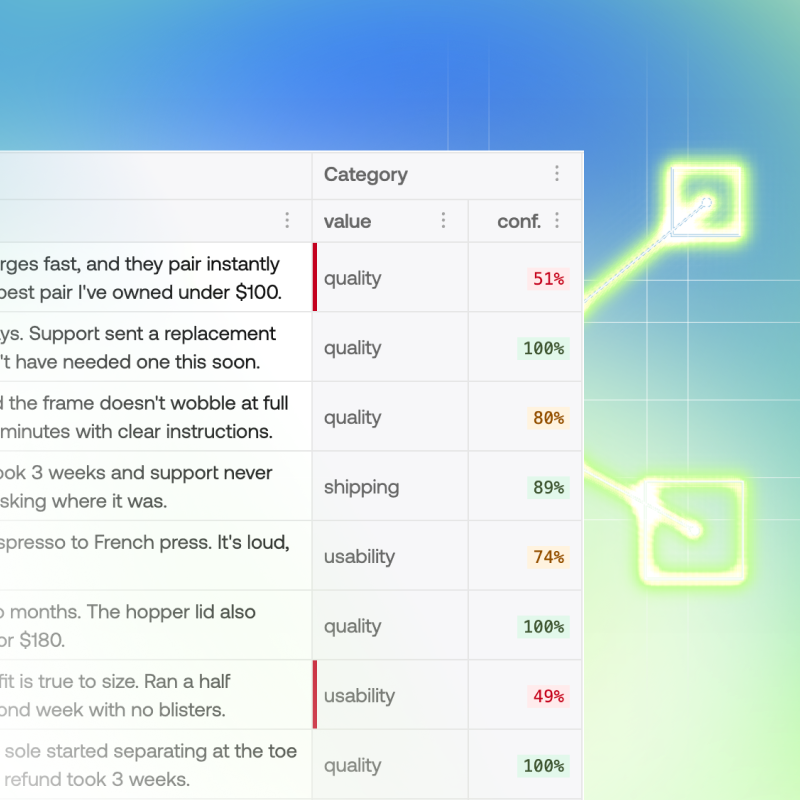
Enrich a spreadsheet of reviews, support tickets or leads using Jev and Handsontable DataGrid, and get a confidence score on every answer.
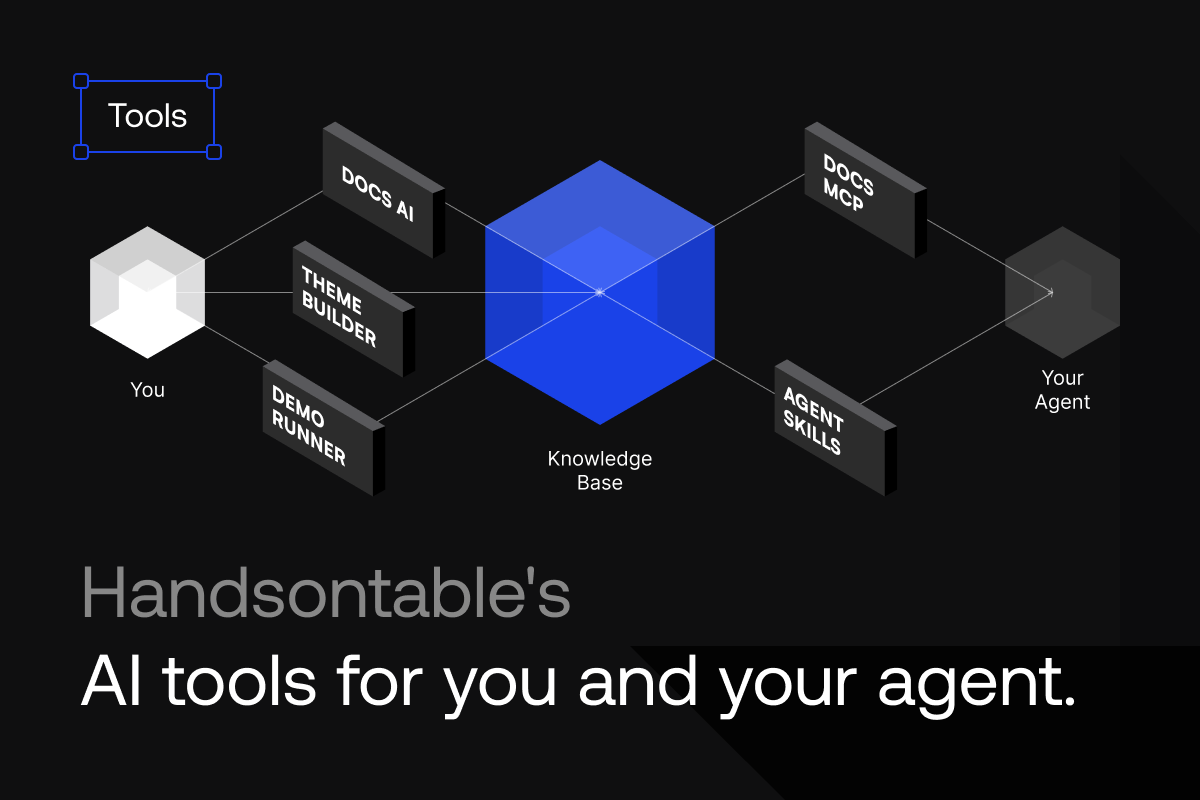
A public Docs MCP server, Claude Code skills, Ask AI in the docs, an AI tab in the Theme Builder and a coding assistant in the demo runner: who each is for.
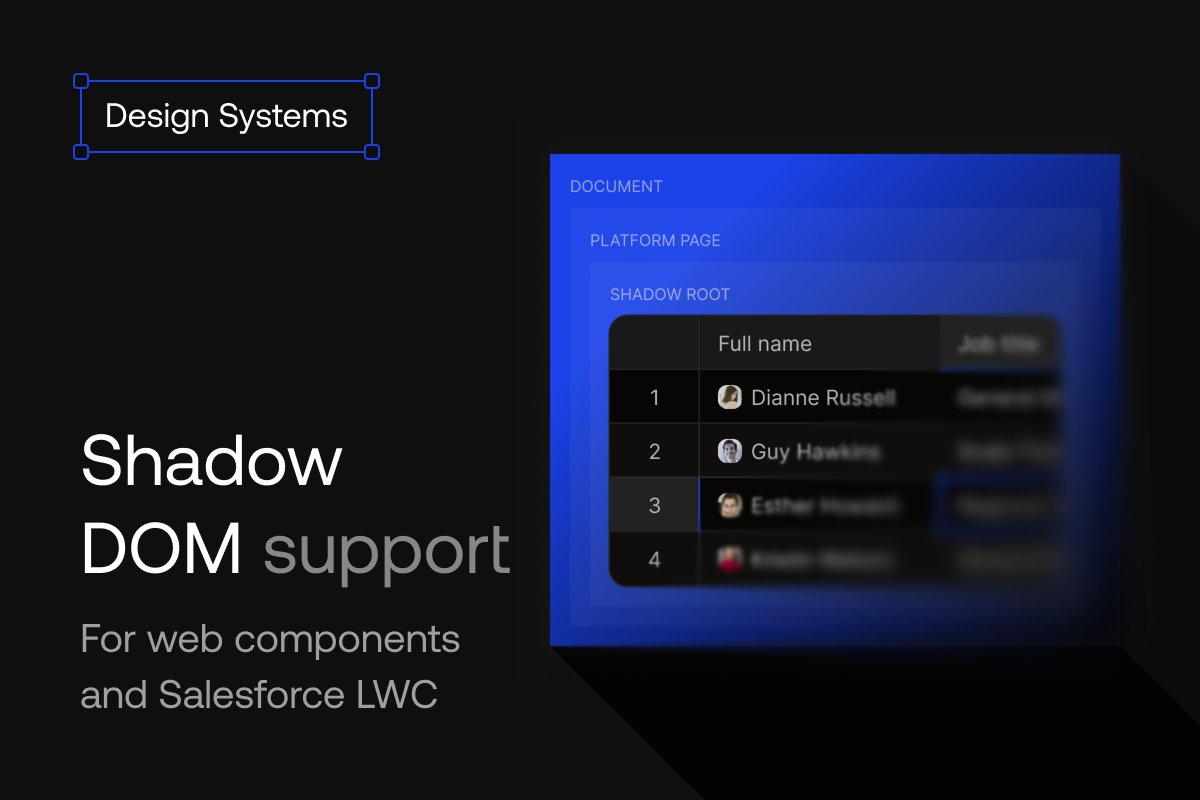
As of Handsontable 18.1.1 the core handles the shadow boundary itself — mouse, focus and clipboard events resolve through shadow roots, with no wrapper.
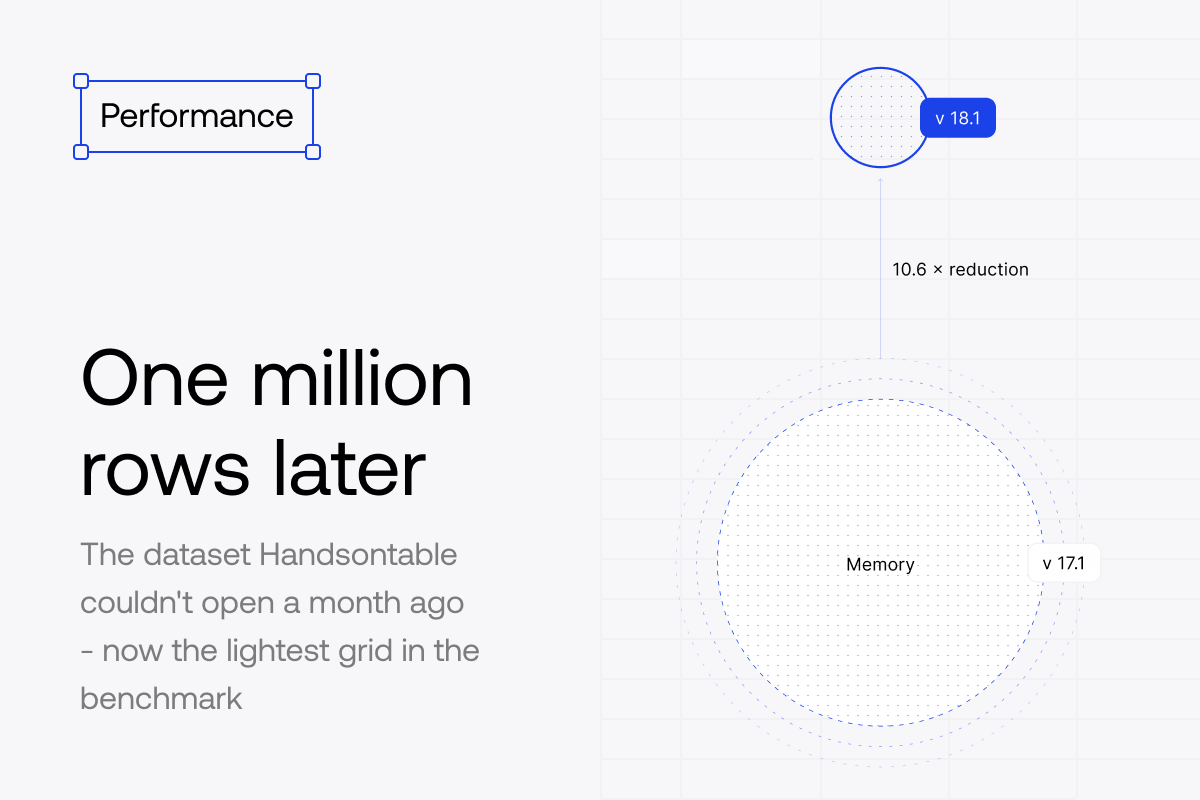
A benchmark said we ran out of memory at 500,000 rows. Three weeks and 31 pull requests later, one million rows render with the lowest heap in the test.
Shadow DOM support including Salesforce Lightning, up to 10x less memory on large data sets, new selection gestures, and a playground for every docs example.
Handsontable 18.0.0 moves the core to TypeScript, rewrites the rendering engine for lower memory use, drops four dependencies and adds a layout system.
How we moved Handsontable’s 342,000-line codebase from JavaScript to TypeScript after years of postponing it, without changing a single end-to-end test.
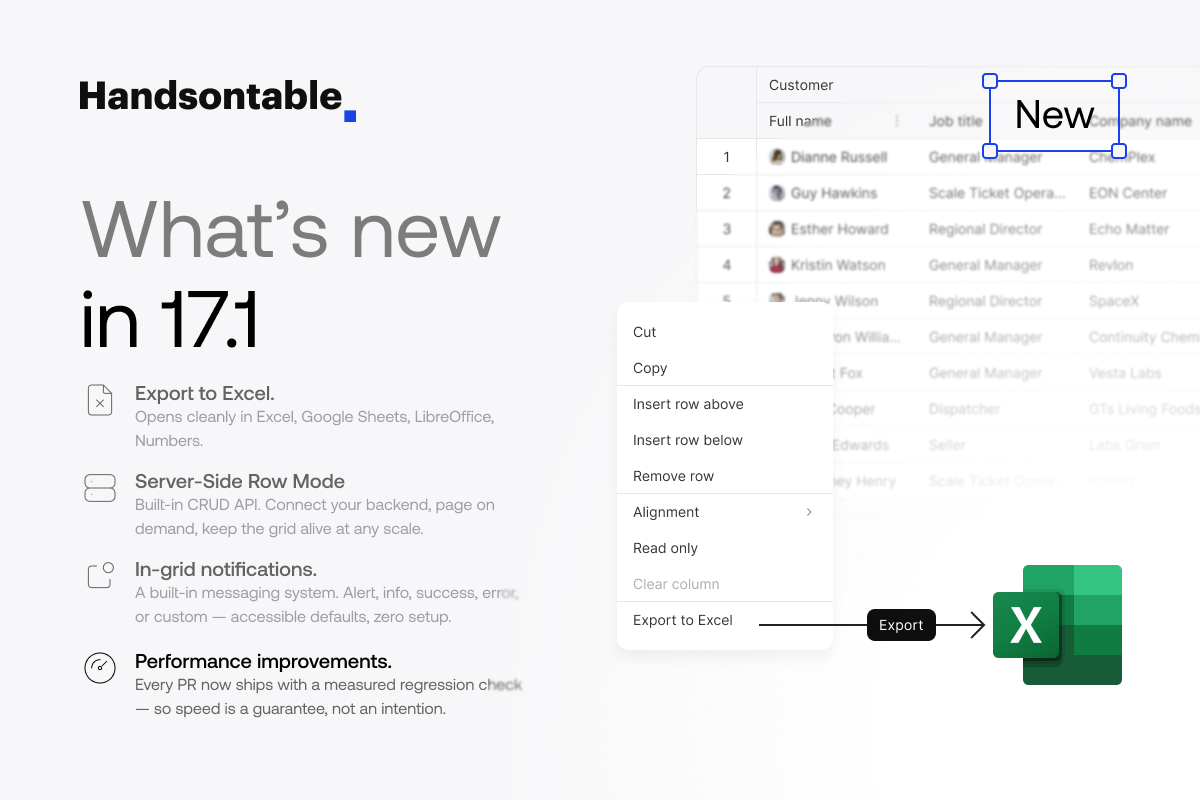
Handsontable 17.1.0 adds a Server-Side Row Model, Export to Excel and built-in toast notifications for the data that flows in and out of the grid.
Let’s make it easier.
Smoother. Faster. All Handsontable.